Why Some 3D Prints Take So Long: Print Time Explained for Kids
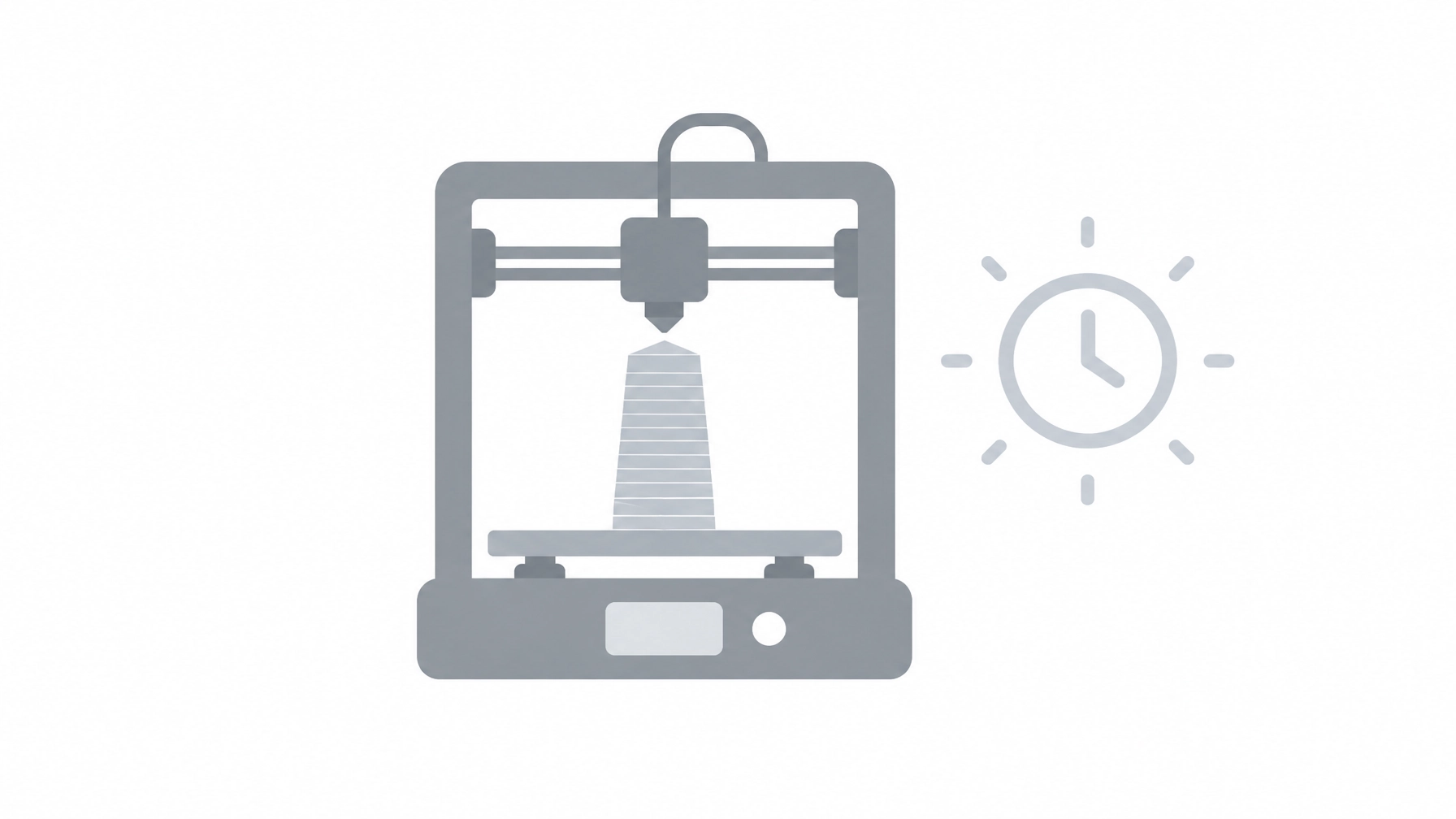
Have you ever watched a 3D printer and thought, “Why is this taking so long?” The answer is simple: a 3D printer builds objects one thin layer at a time.
A small token may take a short time. A tall figure with many details may take hours. That can feel frustrating, especially when you are ready to hold the finished object. But understanding print time helps makers plan better.
Thin Layers Take More Time
Imagine making a stack of pancakes. If you use many thin pancakes, the stack takes longer to build than if you use a few thick slices.
A 3D printer works in a similar way. Layer height means how thick each plastic layer is. Thin layers can make a smoother surface, but the printer must make more trips. Thicker layers usually print faster, though the surface may look more stepped.

An adult sets the layer height and other settings in the slicer before the printer starts.
Size, Infill, and Supports Matter
A tall tower takes longer than a short token because the printer must stack more layers. A wider object also gives the nozzle more area to cover on every layer.
Infill is the pattern inside a print. A mostly hollow object needs less plastic and usually takes less time. A more solid object needs more lines inside, so it takes longer.
Some shapes also need supports. Supports are temporary plastic structures that hold up parts that would otherwise hang in the air. They work like scaffolding around a bridge.

The Printer Gives an Estimate
Before printing, the slicer gives an estimated time. The printer may also show how much time remains while it works. This is helpful, but it is not a promise. The estimate can change as the printer moves, pauses, or completes different parts of the job.
In Palos Verdes, Los Angeles, or anywhere else, the same rule applies: bigger, taller, more detailed prints usually need more time.
Test Small Before Printing Big
Waiting can be hard. One useful idea is to print a small version first. A tiny test can show whether the shape works before an adult starts a much longer print.
The small version may not be perfect, but it can answer important questions: Does it stand up? Are the parts strong enough? Does the shape need a change?

The Clear Lesson
Patience and planning are part of making. A long print is not always a problem. It may simply mean the printer is building more layers, filling more space, or adding supports.
For more beginner topics, visit the Lucas Gorgan blog.